FILM
Tenet Isn’t Cold. You’re Looking in the Wrong Place.
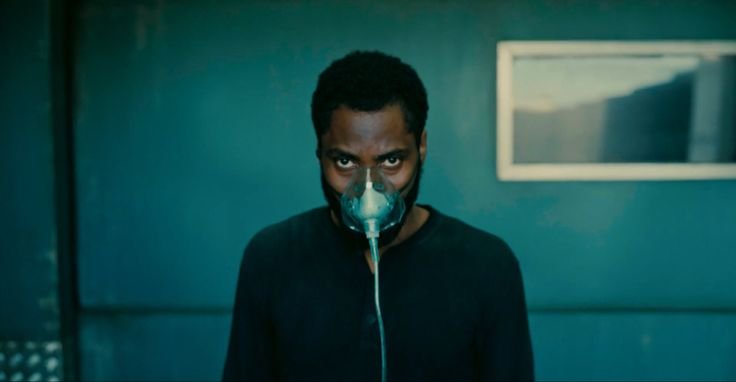
The most common thing said about Tenet is that it’s cold. A brilliant machine with nothing inside it. All architecture, no heart.
I understand why people say that. But I think they’re looking in the wrong place.
There’s a moment near the end of this film where a man walks backwards into a collapsing tunnel to die for someone who hasn’t met him yet. It wrecks me every time. Not because of who he is — we barely know him. Because of how the film is built.
That’s the trick nobody gives Christopher Nolan credit for.
The thinness is the design
First, let’s be fair about what Nolan is actually doing, because the flatness people complain about isn’t an accident.
The lead character doesn’t have a name. The credits call him “the Protagonist.” That’s not laziness — it’s load-bearing. The whole film turns on the reveal that he’s the man who eventually founds Tenet. Give him a name, a hometown, a childhood, and you’ve quietly made him a specific man living a specific life. Nolan needs him to be a position in a loop, not a person with a past.
Kat gets a clean, simple want: get out of the marriage, keep her son safe. That’s the whole of it, and the simplicity is deliberate — it’s the reason you can follow a film where almost nothing else is simple.
Sator wants the world to end because he’s ending. He states it, means it, and that’s the entire motive.
Here’s the design principle underneath all three: the mechanics are complicated, so the motives have to be plain. If both were complex, the film would collapse under its own weight. Nolan knew exactly how much an audience could carry, and he spent all of it on the machine.
Then there’s Neil
Watch the hotel bar scene again. Neil sits down, orders a drink, and he already knows what the Protagonist drinks. It’s a tiny detail. You forget it instantly.
Because Neil isn’t meeting him. Neil has known him for years.
Their friendship runs in opposite directions. The Protagonist is at the beginning of it. Neil is at the end. Every joke, every bit of easy warmth he offers this stranger — it was never warmth toward a stranger. It’s a man being gentle with someone who hasn’t met him yet.
Which means Neil already knows how the story ends. He knows where he dies. He’s known for a long time.
So when he walks back into that tunnel, he isn’t deciding anything. He’s keeping an appointment.
The structure is the feeling
Here’s the part I think is genuinely remarkable: nothing I just told you was said out loud.
Nobody explains Neil’s timeline. There’s no scene where he sits the Protagonist down and confesses it. The film never spells it out. Instead, the meaning arrives through structure. You’re handed information long before you’re handed its meaning — the drink order, the orange tag on his backpack, the way he’s never once surprised by anything. Then the last five minutes reach back and rearrange everything you already saw.
That’s the engine of this film, and Nolan runs it on the audience constantly. The masked man in the Freeport fight. The woman diving off the yacht. You watch the answer before you know the question.
But every other time he does this, the payoff is a plot revelation. Oh — that’s him.
With Neil, the payoff is grief.
Same technique, completely different target. Nolan takes the structural trick he’s been using to build puzzles all film, and for one character, he points it at your chest. That’s not a cold film. That’s a film that puts its emotion somewhere unusual.
The cost of the trick
So why does almost nobody come out of Tenet feeling this the first time?
Because the technique that makes Neil work has a price, and I don’t think Nolan could have avoided it. Delayed meaning only pays off once you’ve reached the end. Everything Neil is lands in the final five minutes, retroactively, all at once, on a viewer who has spent two hours doing arithmetic. Most people are still solving the plot when the emotion arrives. They don’t get to feel it until the second watch.
That’s not a flaw in the design — it is the design. The film asks you to come back, and it rewards you enormously when you do. But it does mean the feeling is on a delay, and most of the audience only shows up once.
It’s the trade Nolan made. I think he made it knowingly. And I think Neil is worth it.
What I took from it
Here’s what I actually carried out of this film into my own work.
Tenet convinced me you can shoot an idea nobody can hold in their head. Reverse entropy isn’t something an audience can picture. Nolan never really explains it — he just puts a bullet back into a gun and lets you watch. That changed how I think about writing difficult ideas: when a concept is too big to say, make it physical. Let people watch it happen and trust them to catch up.
Neil taught me the second half of that lesson. Structure itself can carry emotion. You don’t always need a monologue. Sometimes you need a detail planted an hour early, and a reveal that reaches back and re-lights it.
If I’m honest, I’d have liked one more inch of him — one more scene, one more look, some small human thing. Not to explain him, just to sit with him a moment longer.
But that’s not a complaint. That’s what a film does when it makes you care about someone it barely showed you.
Tenet puts its emotion in the structure. Interstellar does the opposite — it says the thing out loud, in a line so sincere that people have been mocking it for a decade. Next time, I want to look at whether that line is actually the failure everyone says it is, or whether we’ve just gotten embarrassed about films that mean something.